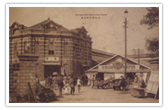
The Red House-A Century of Stories and Blessings
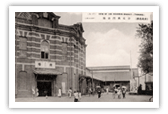
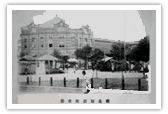
From its completion in 1908 to today, Red House has witnessed the Qing Dynasty, the Japanese occupation of Taiwan, and the Republic of China. Coming under influences from Japan, Shanghai and Western cultures, it has served as a market for wealthy residents, a gathering site for various Chinese cultural industries, and a window to the ideological trends of Western civilizations. It has been a melting pot of the culture, business and history of Taipei, and possesses a style and significance that is avant-garde, modern, novel and diverse.
Searching the past, we see that Red House has been a meeting point for Japanese, Chinese and Western cultures. It has evolved along with the Ximen area over time, and as a center for entertainment for people of all ages, it serves as a window on Taiwan culture. In its early days, it imported and created fashions and was a source of economic activity, serving as a main focal point for Taiwan’s business development. Looking to the future, Red House represents a coexistence and pride found in its mixture of old and new, in which history, culture and business merge. It is a landmark that will supersede even its own glorious past.
The Red House-Beautiful History
| 1882 |
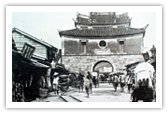
Taipei City Walls begins construction; graveyard outside of Ximen Wall is expanded.
|
| 1885 |
Liu Mingchuan comes to Taiwan; people begin congregating to buy goods in the new market. |
| 1895 |
Japanese come to Taiwan. |
| 1900 |
City wall torn apart to create new buildings. |
| 1908 |
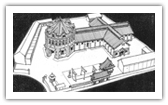
Ximen Market’s Red House is completed. Ximending becomes a center for Japanese living in Taipei, a flourishing area filled with fashions and goods. It also becomes an entertainment center for Wanhua, Dadaocheng and Chengnei, as well serving as a model city for the Greater East Asia Co-prosperity Sphere. |
| 1945 |
Japanese lose WWII and the KMT take control of Taiwan. Large numbers of people immigrate to the city, propelling Red House into its golden age. Huyuan Peking Opera, storytelling and stage plays become a comfort to new residents. |
| 1963 |
Western thought becomes fashionable. Red House Theater cinema opens, showing black-and-white martial art epics, older Western movies and Chinese films set in ancient times. With cheap all-day tickets, the theater is very popular with young people, so that watching movies at Red House Theater becomes a memory shared by all students from this time. |
| 1990 |
The shops in Red House stay open in the unlicensed building. As Taipei develops to the East, this area becomes neglected. |
| 1994 |
Dream of Red House event becomes a turning point in the revitalization of the area. |
| 1997 |
Red House is announced as a Class III Historical Landmark and close down. |
| 2000 |
Fire burns the cross tower and unlicensed shops in the Cross Building and North-South Plaza; reconstruction becomes the start of a new era for Red House. |
| 2002 |
The Paper Windmill Foundation takes on the task of reconstructing the Red House Theater, bringing together various performance groups to take turns giving performances, making Red House market a joyous, bustling place once again. |
| 2008 |
Centennial anniversary of Red House. The Taipei Cultural Foundation takes over in promoting Red House to help it retain its former glory. The building serves people from far and wide, displaying Red House’s unique beauty and historical significance. |