
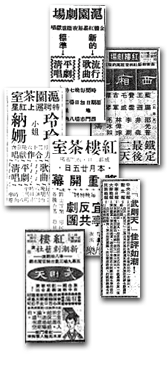
During this era, Red House was being managed by Chen Hui-wen from Shanghai. The building underwent many different name changes over the years, holding a wide variety of performances, including Peking Opera, Cantonese opera, popular music, dance shows, comedy routines and dramas. In 1949, some songs were performed that were not acceptable to the new government, and as a result was shut down.
This era in which the building served as a theater did not last long, but as mainland China was suppressing actors and performers at the time, the freedom found at Red House
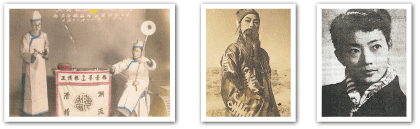
張英、陳麗萍、吳燕麗、'楊榮華提供提供
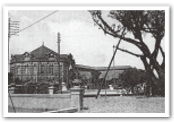
三線道綠樹成蔭。
臺北市文獻委員會提供
日據時代西門紅樓前方有橢園公園(今捷運西門站6號出口處)及三線道(今中華路),三線道上大王椰子、楓樹、蘇鐵成蔭,有東方小巴黎之稱,橢園公園採法式風格,呈現的是日本明治維新全面西化後的都市規劃特色。
1895年馬關條約簽署內容,臺灣永久割讓給日本,因此日本人將維新西化所學套用在臺灣,十餘年後,日日新報敢言「台北建設不遜於歐美」。
光復後,大陸移民在三線道上佔地搭棚討生活,三線道則改名為中華路。美食作家逯耀東在「中華路再走一回」文中回憶,「窩棚時期」那兒蝟集大同川菜,致美樓、厚德福的北京菜及後來的真北平;後來,「窩棚」實在有礙市容,建成忠、孝、仁、愛、信、義、和、平等八棟的「中華商場」,集合各省口味,點心世界、真北平、小小松鶴樓的姑蘇麵點、吳抄手、好味道的溫州大餛飩、陝西館的泡饃、山西館的刀削面、湖南菜的曲園、江浙的三合樓等等。
中華商場雖豐富了西門町,終因西門圓環交通窒礙難行,在30年後成了都市盲腸,於1992年拆除,只留下世代都市容貌的迥異記憶。
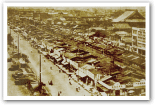
光復後三線道改為中華路,外省移民搭棚蝟集。
臺北市文獻委員會提供
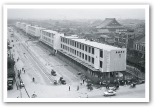
1961年中華商場竣工,為當時重要建設,並帶領西門町進入黃金期。
高傳棋提供